Top Stories
Mining
Tusker completes first modern rutile exploration program in Mzimba
July 10, 2026 / Wahard Betha
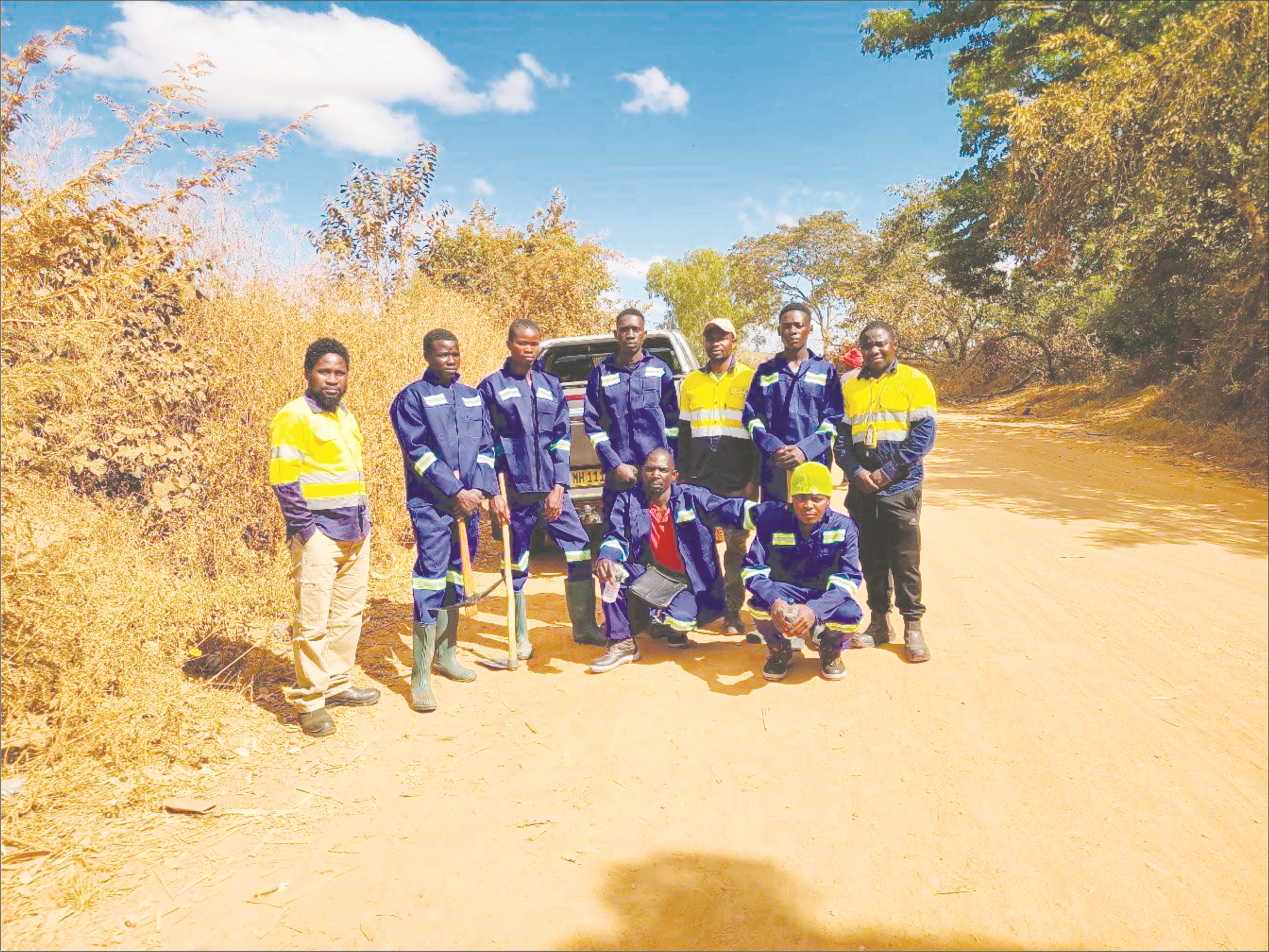
ASX-listed Tusker Minerals has announced the completion of its maiden systematic exploration program at the Mzimba Rutile Project in northern Malawi, a program which was designed to evaluate the project's potential to host large-scale residual rutile mineralisation.
In a press statement, Tusker CEO Cliff Fitzhenry said the exploration work was completed on time and within budget, a development which marks a material step in the Company's strategy of building a portfolio of high-quality African rutile assets.
Fitzhenry commented: "The successful completion of this program marks an important milestone for Tusker and represents the first modern, systematic exploration program specifically targeting rutile at Mzimba.”
“While assay results remain pending, the scale and consistency of geological indicators observed throughout the program are highly encouraging and support our view that Mzimba has the potential to emerge as a significant rutile district.”
“Our team has been particularly encouraged by the numerous positive field indications observed throughout the program.”
“We identified the key geological ingredients associated with residual rutile systems, including well-developed ferruginous pedolith, extensive mottled clay horizons and deeply weathered saprolitic profiles.”
Fitzhenry also said the company observed visible heavy minerals and rutile grains both on surface and within panned samples.
He said: “Importantly, these indicators have been identified across a large project area, consistent with a geological setting where residual rutile systems can develop.”
“These indicators have been observed across an area of approximately 710km², the majority of which remains largely underexplored for rutile.”
“The ability to process samples using our own in-country infrastructure and technical workflows in Malawi provides us with a cost-effective and efficient pathway to rapidly assess the project's mineral assemblage and rutile potential.”
He explained that the program focused on assessing the distribution of titanium mineralisation, characterising weathering profiles and identifying geological conditions associated with residual rutile deposits.
Fitzhenry said the assessment included: mapping and reconnaissance exploration across priority target areas to better define the distribution of titanium mineralisation, characterise the weathering profile, identify additional target zones and refine the geological model; excavation of six exploration pits and collection of 31 channel samples from pit sidewalls to assess rutile potential throughout the complete weathering profile and provide geological and grade continuity information in near-surface saprolite and lateritic material and: project-wide, systematic and wide- spaced regional soil sampling campaign to define and extend high-grade rutile zones and prioritise future auger drilling activities.
He said the combination of widespread titanium mineralisation, extensive residual weathering profiles and visible rutile grains observed across multiple target areas provides encouragement that rutile enrichment may occur over a much broader area than previously recognised.
Fitzhenry said “These observations support the Company's view that Mzimba hosts many of the geological characteristics associated with large-scale residual rutile systems.”
“This first phase program builds on the Company's March 2026 discovery announcement, which identified titanium mineralisation hosted predominantly by rutile across multiple areas of the project.”
“The discovery sampling covered only approximately 50km² (around 7% of the total licence package) highlighting the significant exploration upside that remains across the broader project area,” he said.
The Mzimba Rutile Project forms part of Tusker's strategy of building a portfolio of high-quality titanium and heavy mineral sands assets across Africa.
He said together with the Company's Central Rutile Project and Douala Basin HMS Project in Cameroon, Mzimba provides exposure to multiple highly prospective titanium-bearing mineral systems at a time when global demand for titanium feedstocks continues to strengthen, driven by pigments, aerospace applications, advanced manufacturing and emerging clean energy technologies.
Geologically, the project lies within the Mesoproterozoic Irumide Belt, which extends from eastern Zambia into northern and central Malawi.
The belt comprises of high-grade metamorphic basement rocks including orthogneiss, paragneiss, schist and granulite, intruded by granitic bodies and locally associated with pegmatite swarms that have historically been mined for gemstones such as beryl.
Share this:
Leave a Comment
Comments
Mining & Trade Review News

Agribusiness News

Subscribe to Newsletter
Rehabilitation:
The establishment of a stable and self-sustaining ecosystem, but not necessarily the one that existed before mining began. In many cases, complete restoration may be impossible, but successful remediation, reclamation, and rehabilitation can result in the timely establishment of a functional ecosystem.
Archives
Remediation:
The cleanup of the contaminated area to safe levels by removing or isolating contaminants. At mine sites, remediation often consists of isolating contaminated material in pre-existing tailings storage facilities, capping tailings and waste rock stockpiles with clean topsoil, and collecting and treating any contaminated mine water if necessary.
Stakeholders Logos